Deutsch
 Français
 Türkçe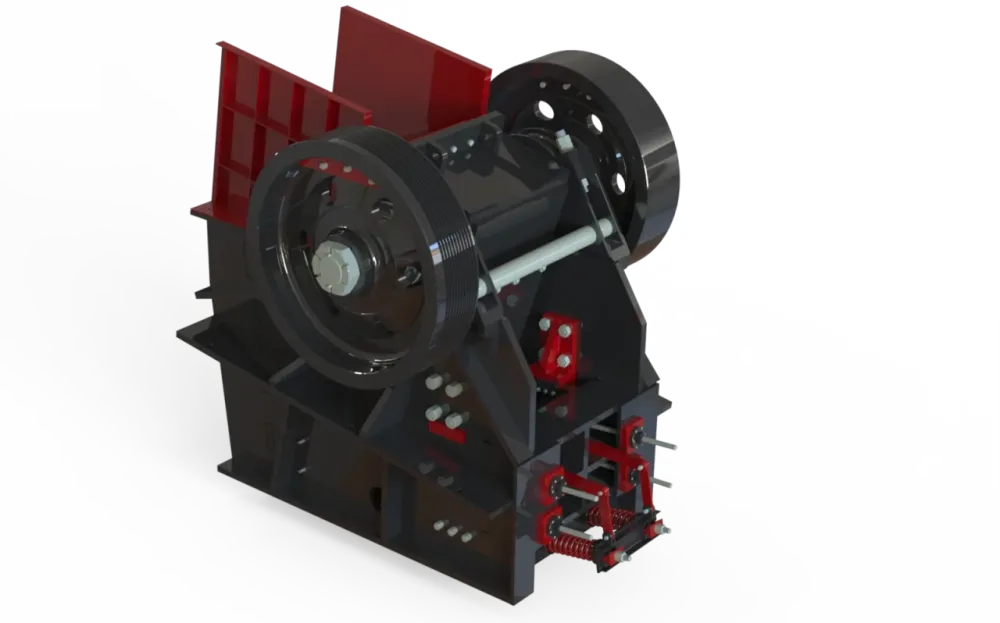
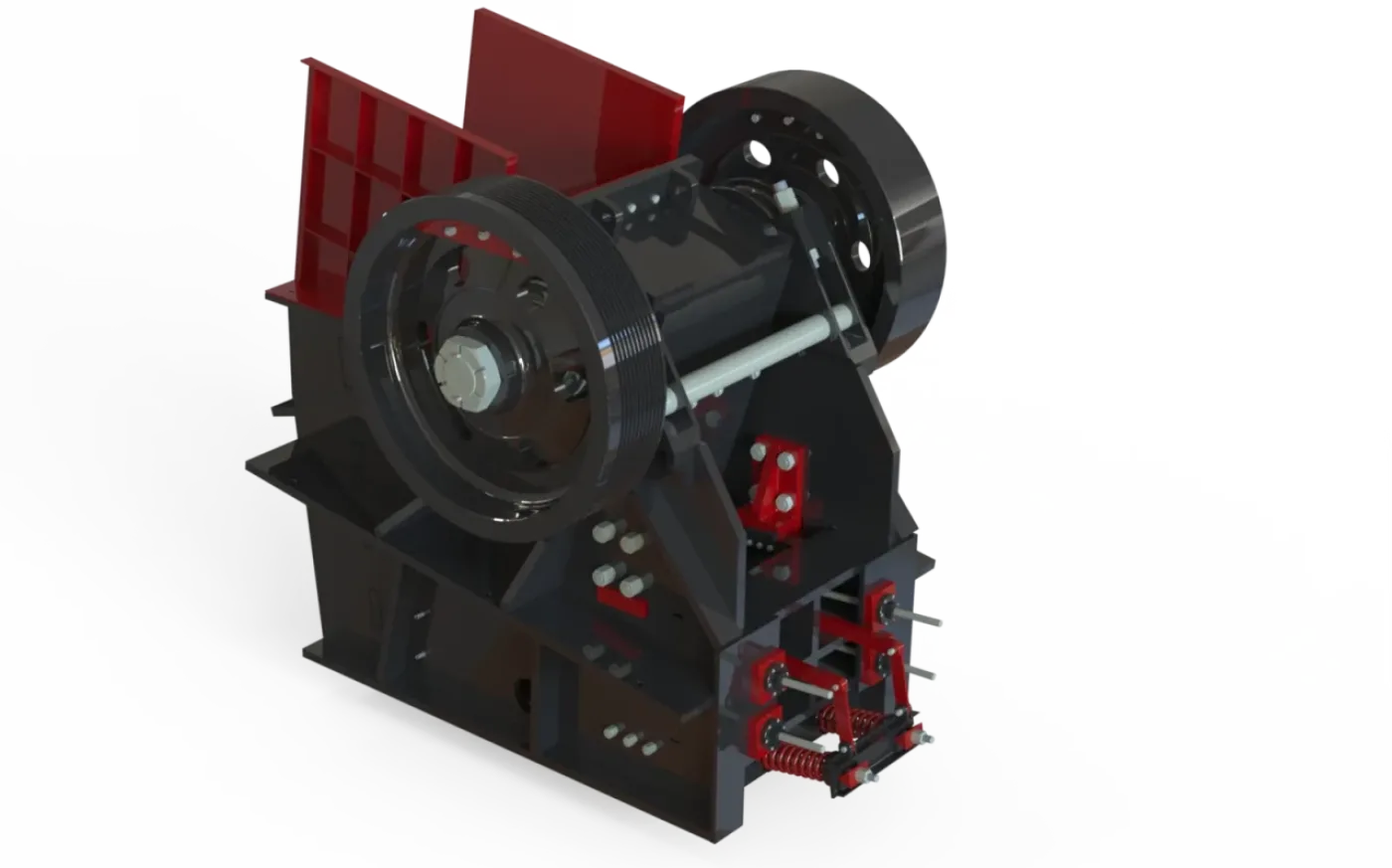
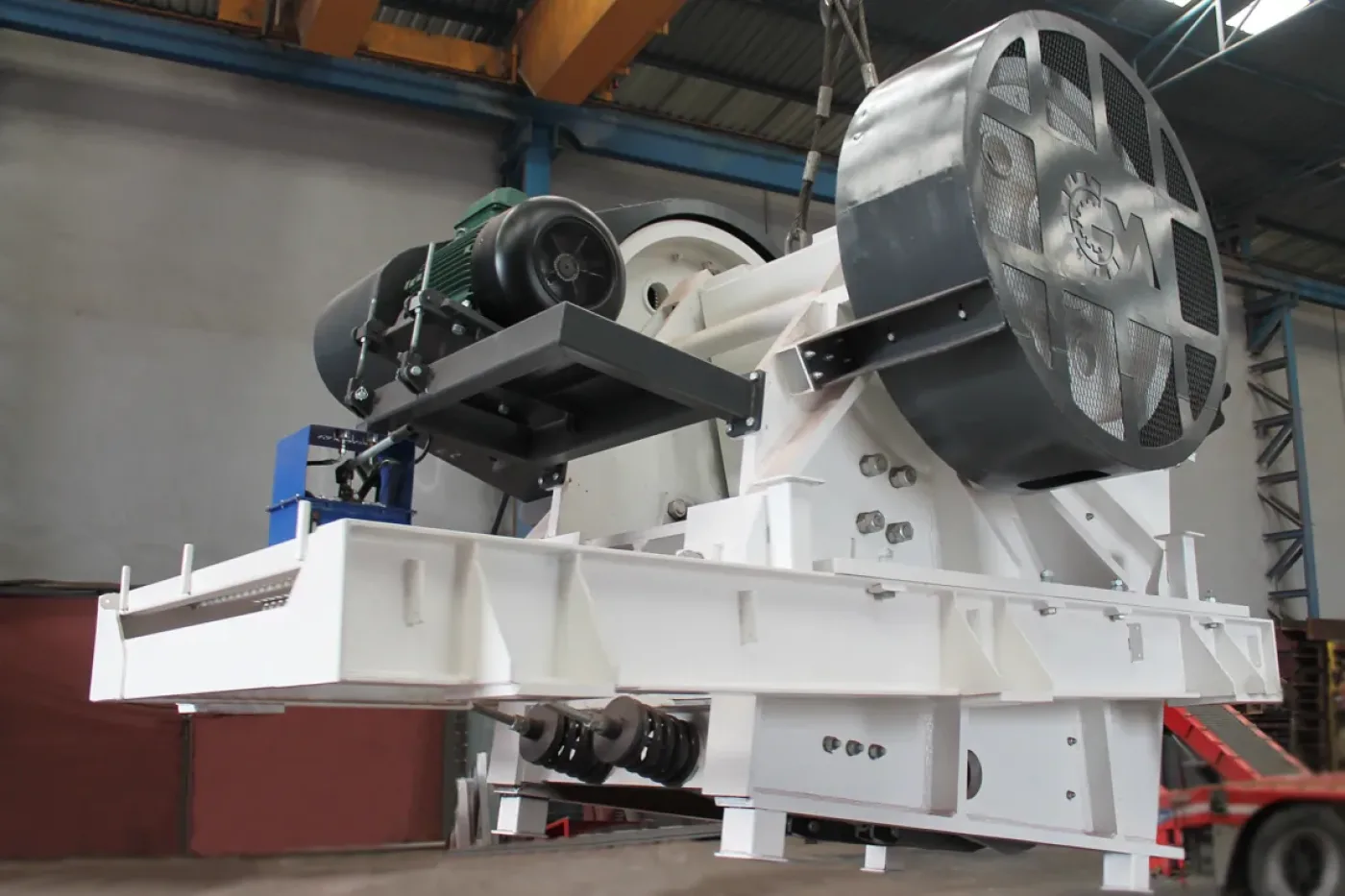
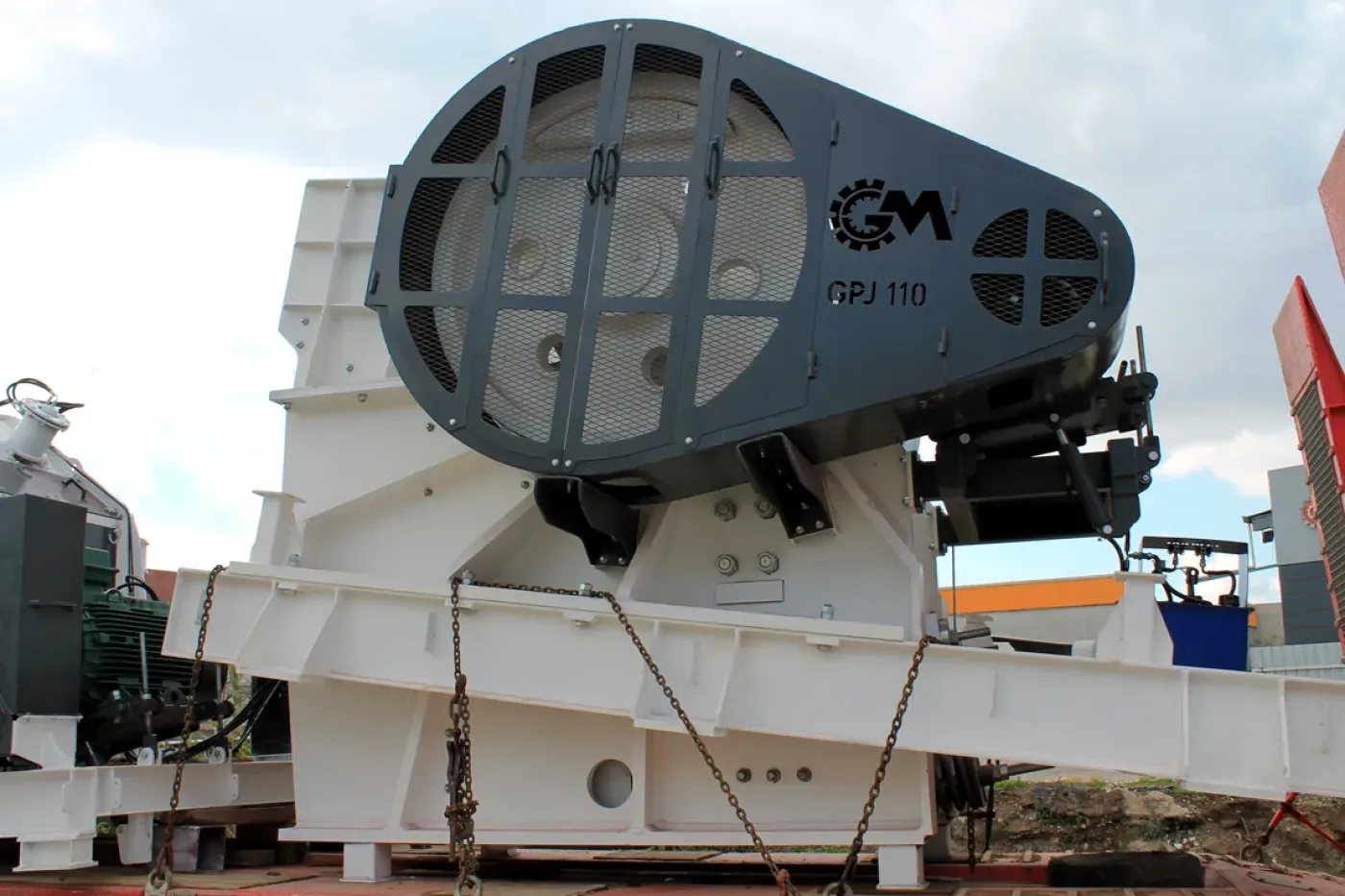
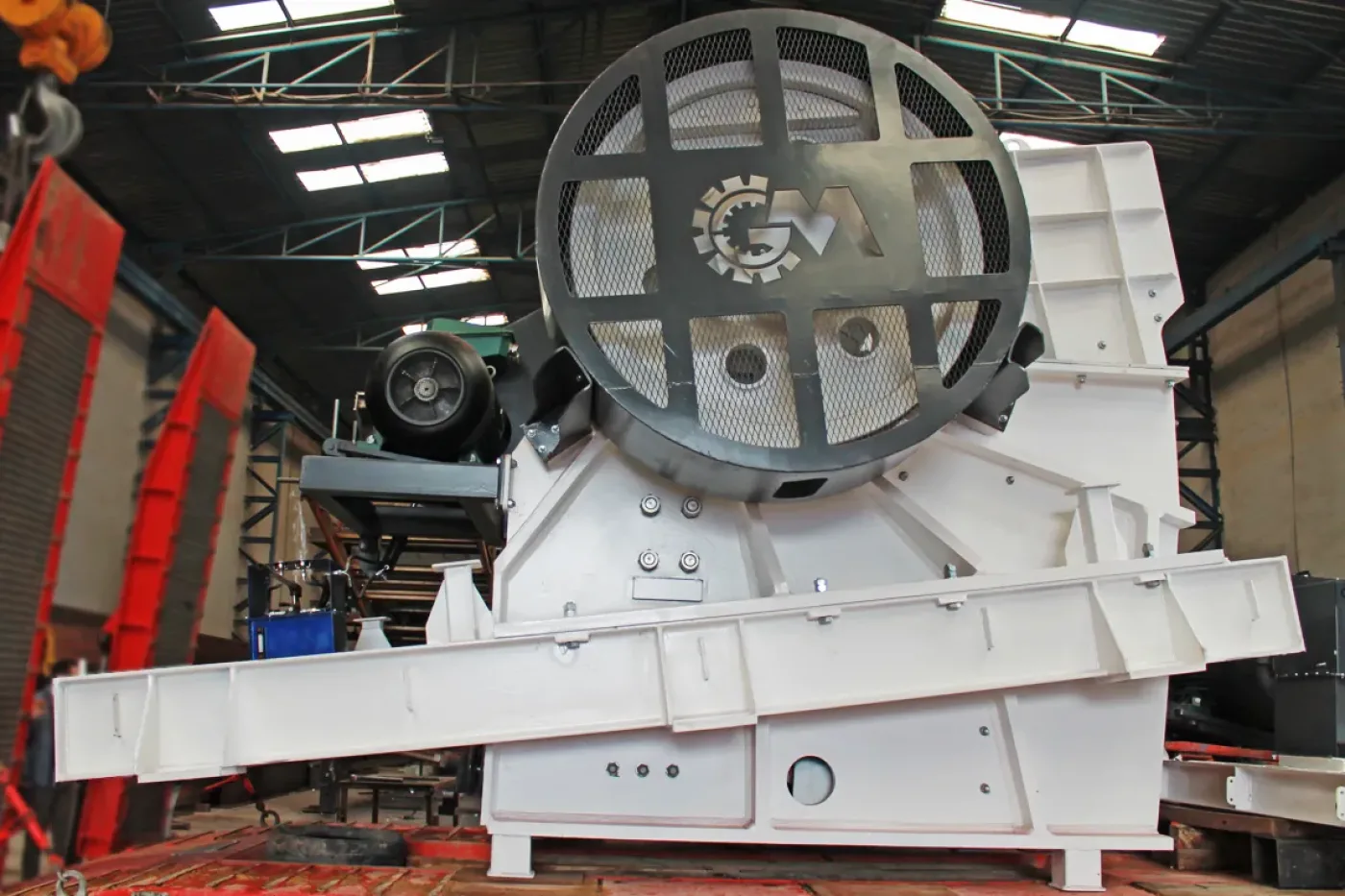
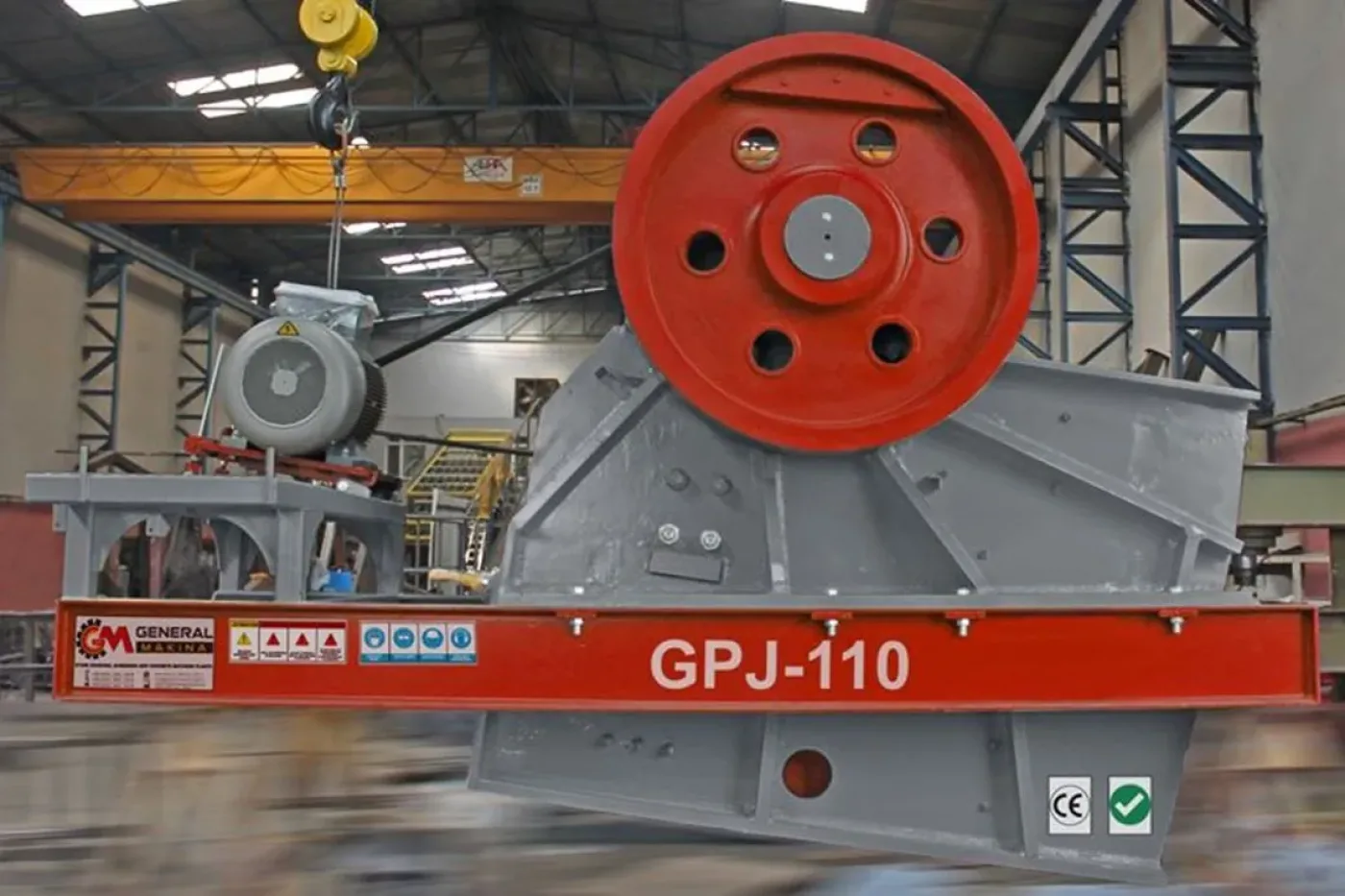
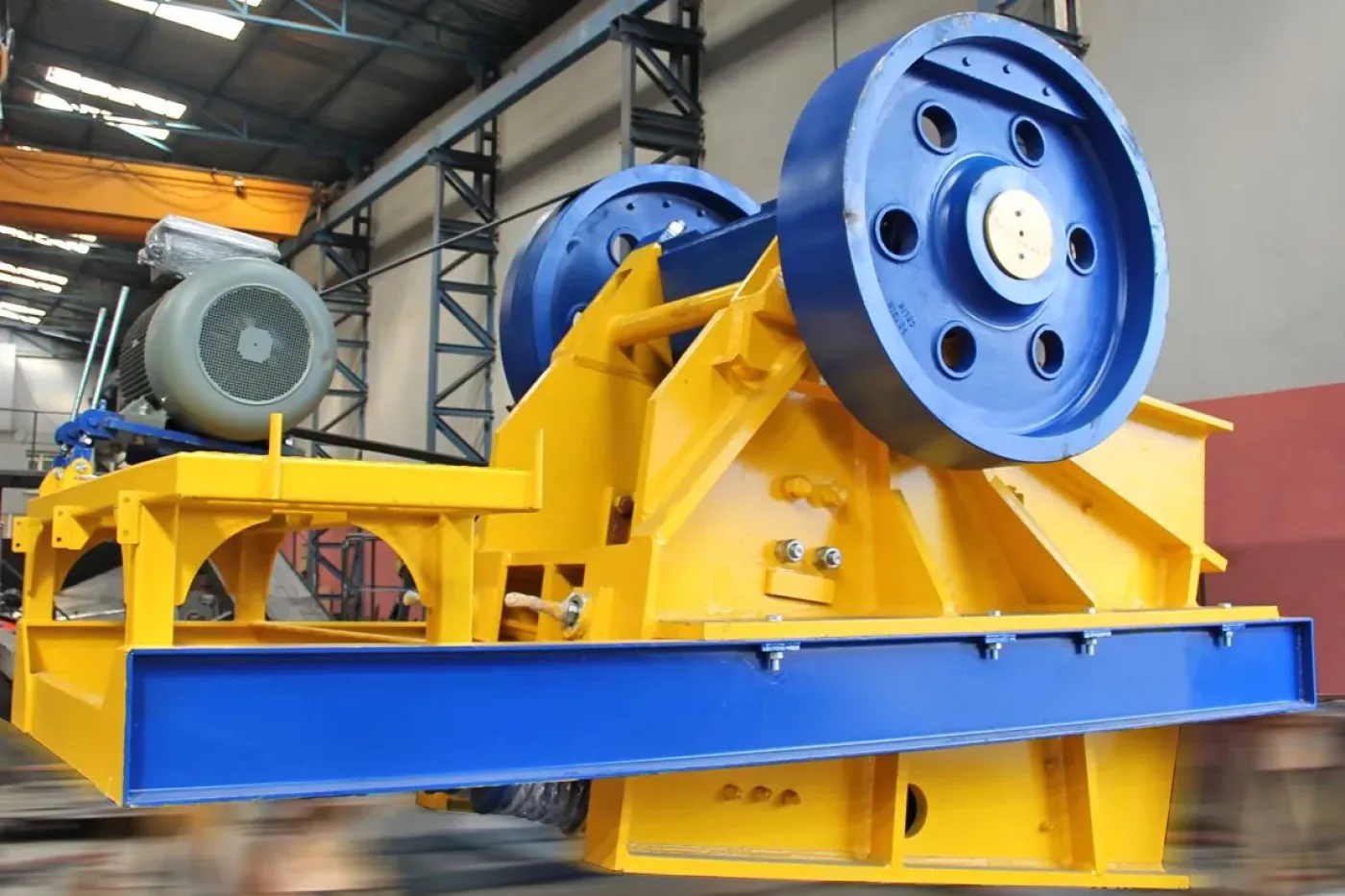
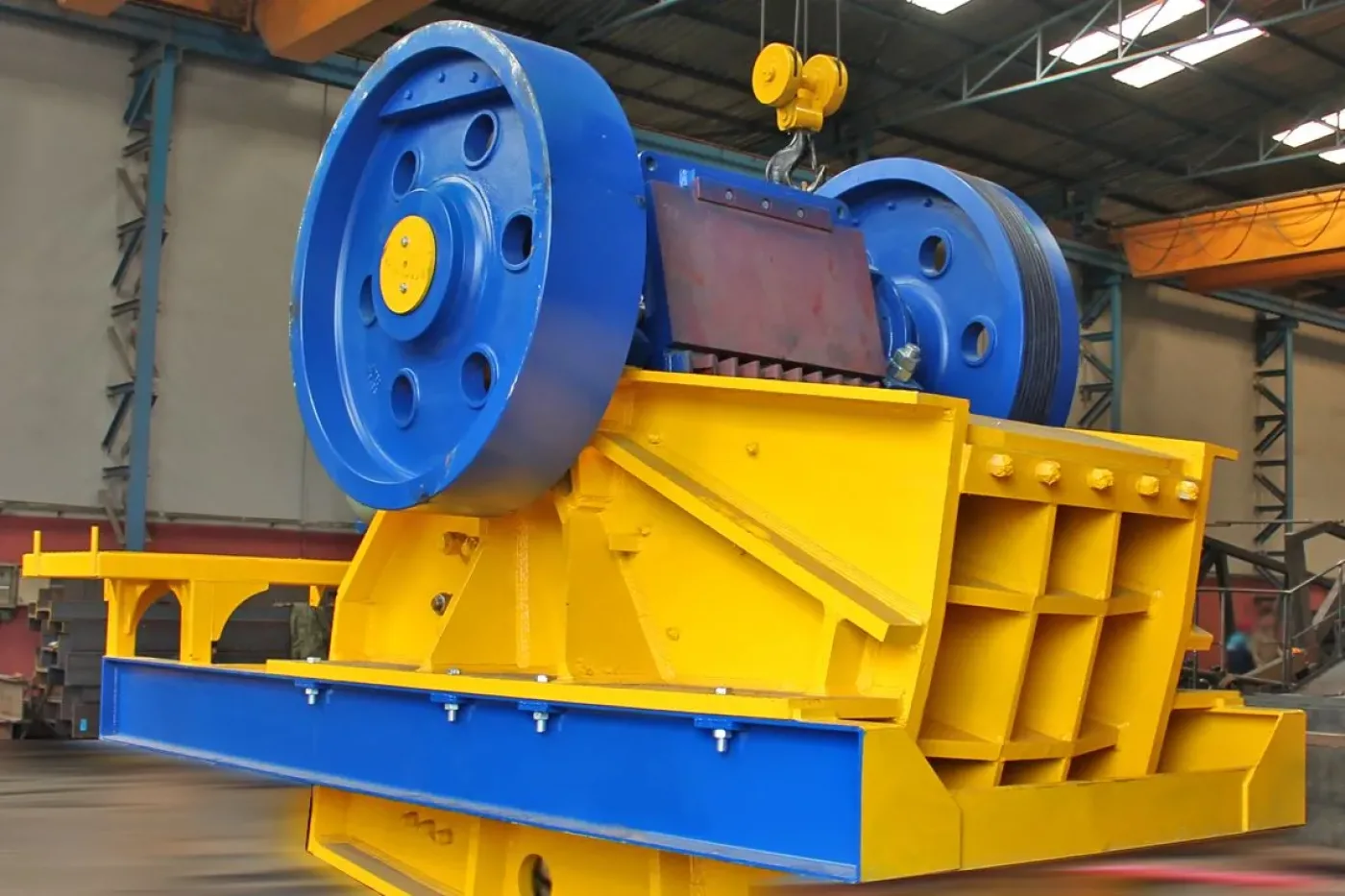
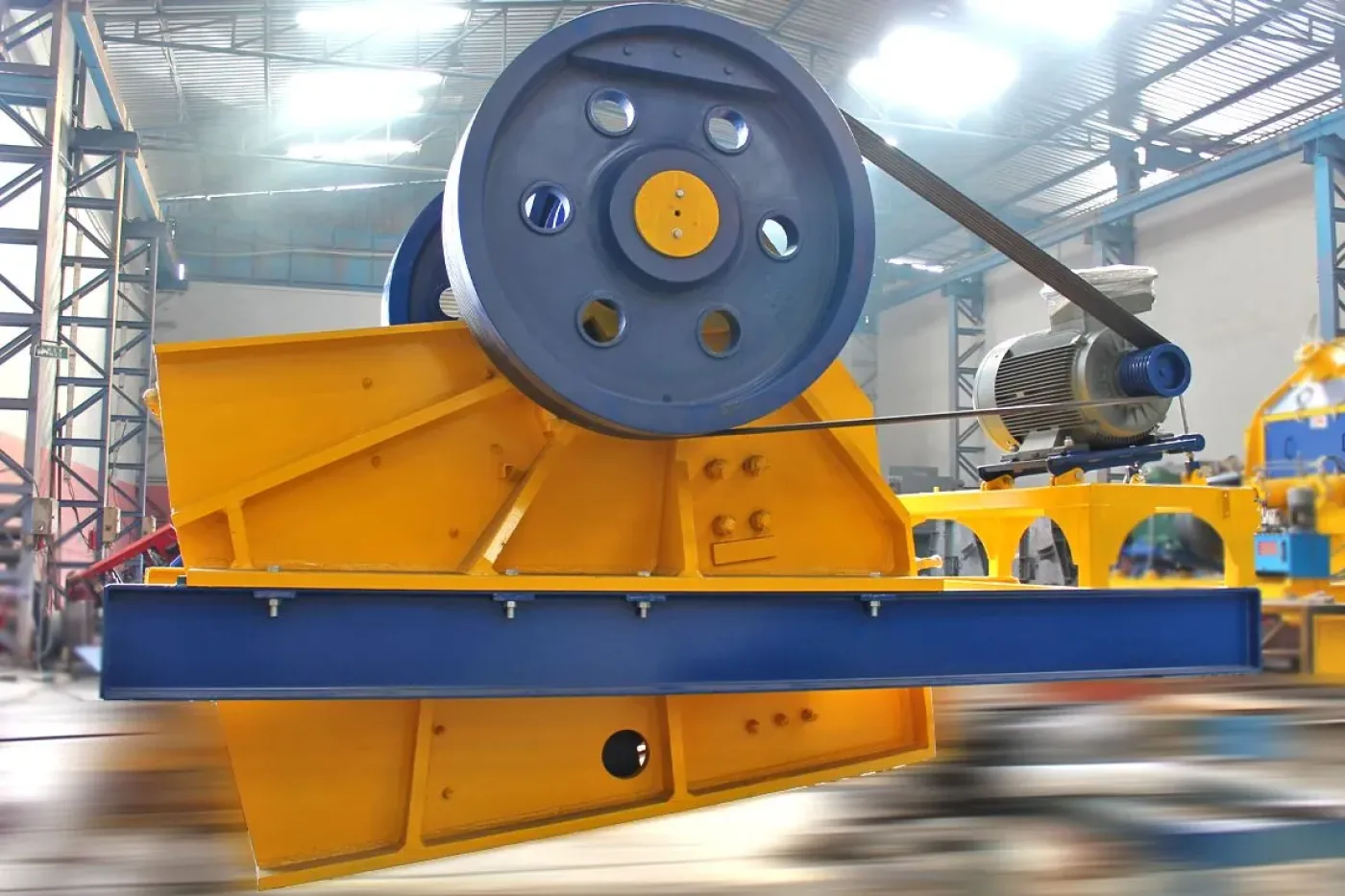
GNRK Series Jaw Crusher (Primary)
Summary: The GNRK series jaw crusher reduces coarse run-of-mine rock by compression as a primary machine. Capacity 20–600 tph, feed openings 610×380–1400×1100 mm, 30–200 kW.…
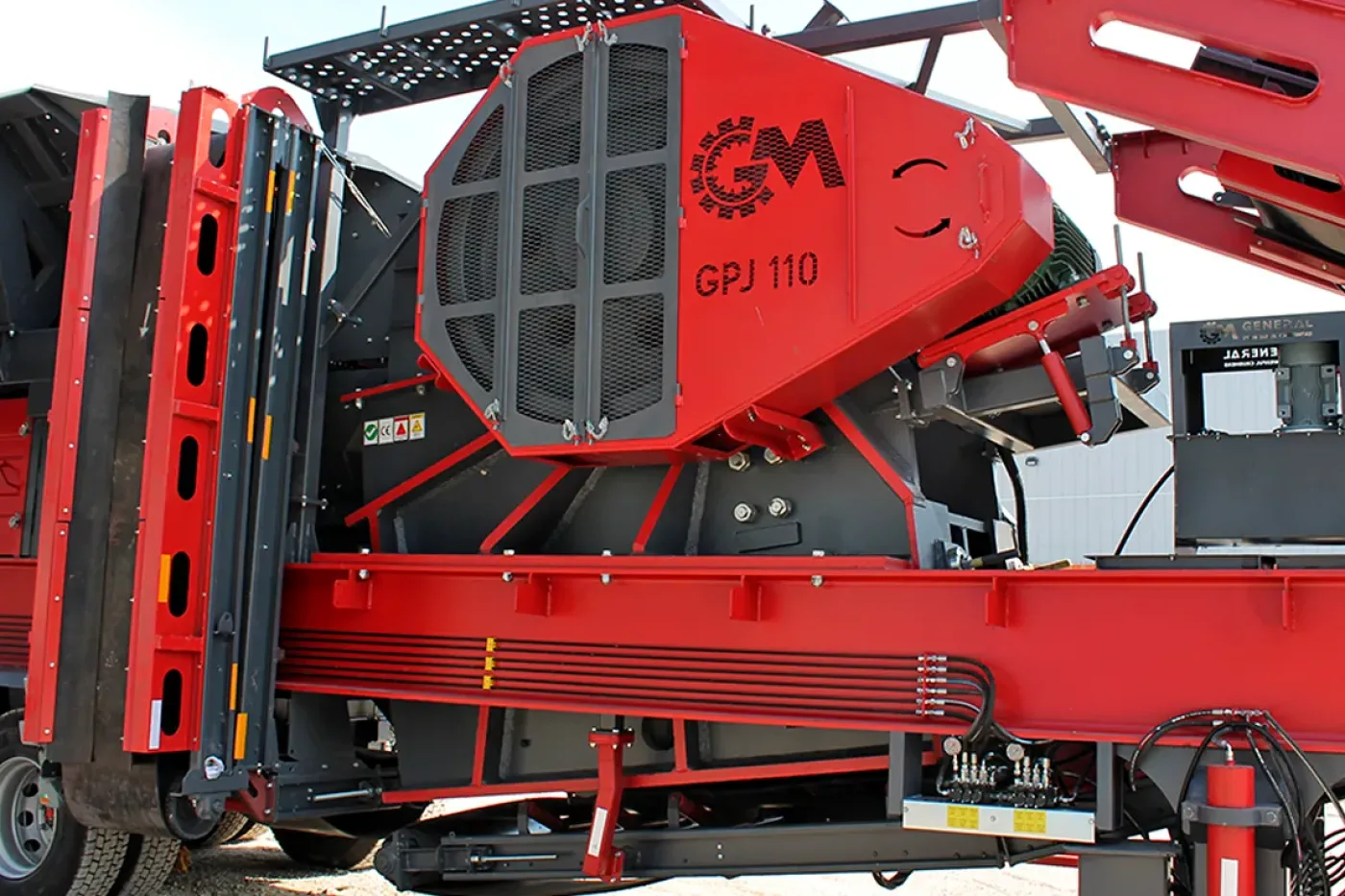
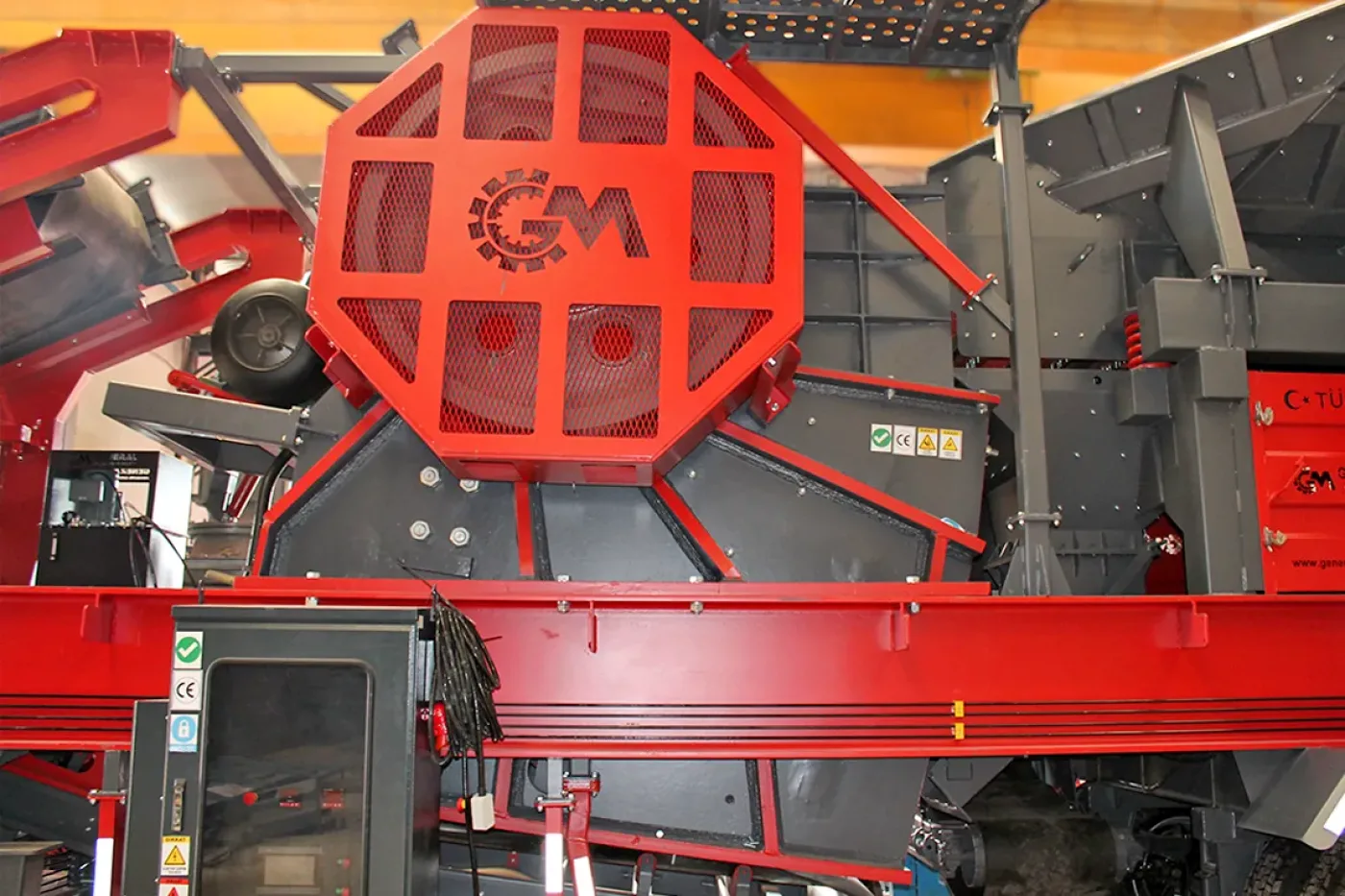
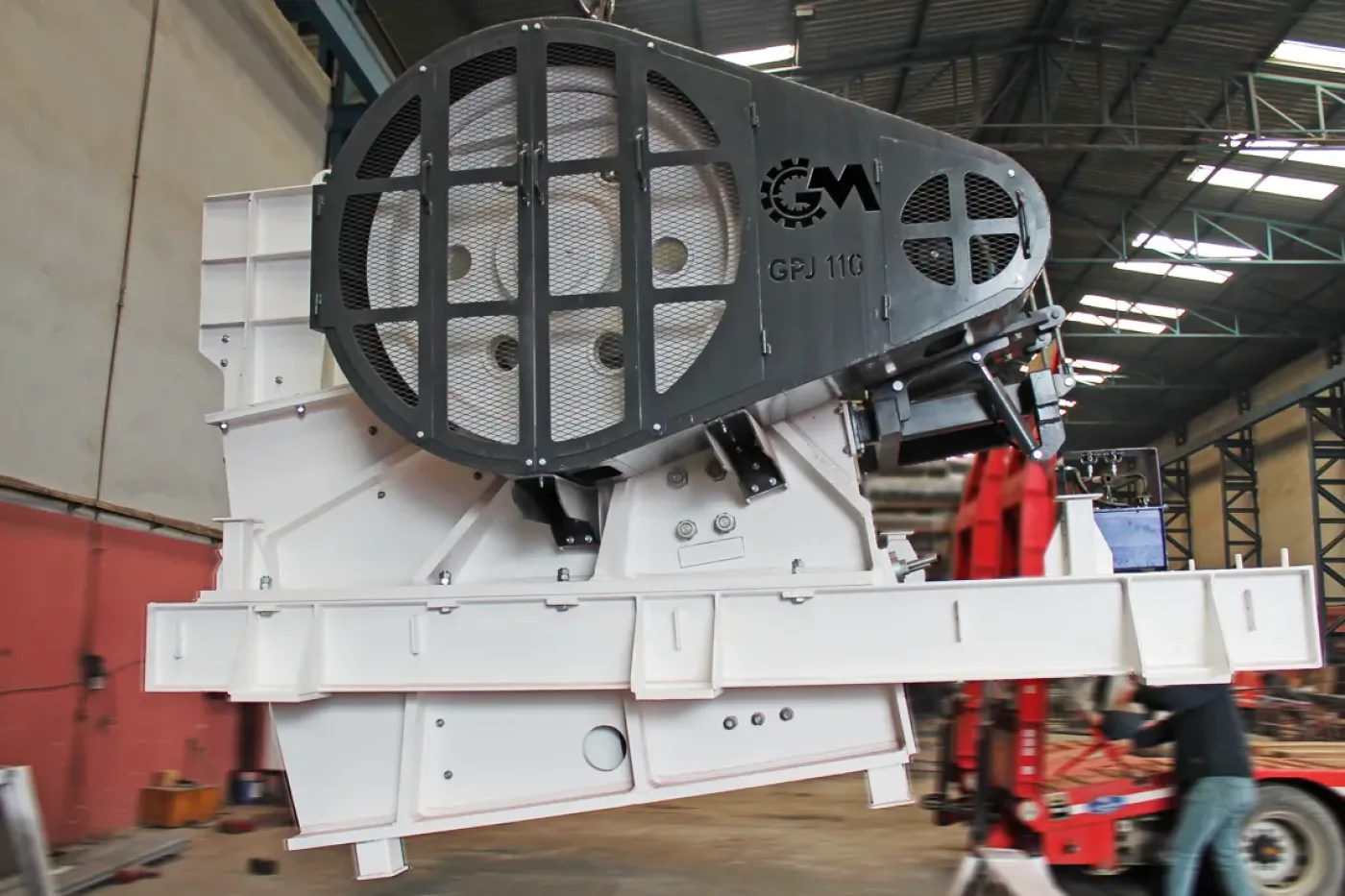
The GNRK series jaw crusher reduces coarse run-of-mine rock by compression as a primary machine. Capacity 20–600 tph, feed openings 610×380–1400×1100 mm, 30–200 kW. Suited to hard, abrasive rock such as granite, basalt, river gravel and slag; the entry crusher of every crushing-screening plant.
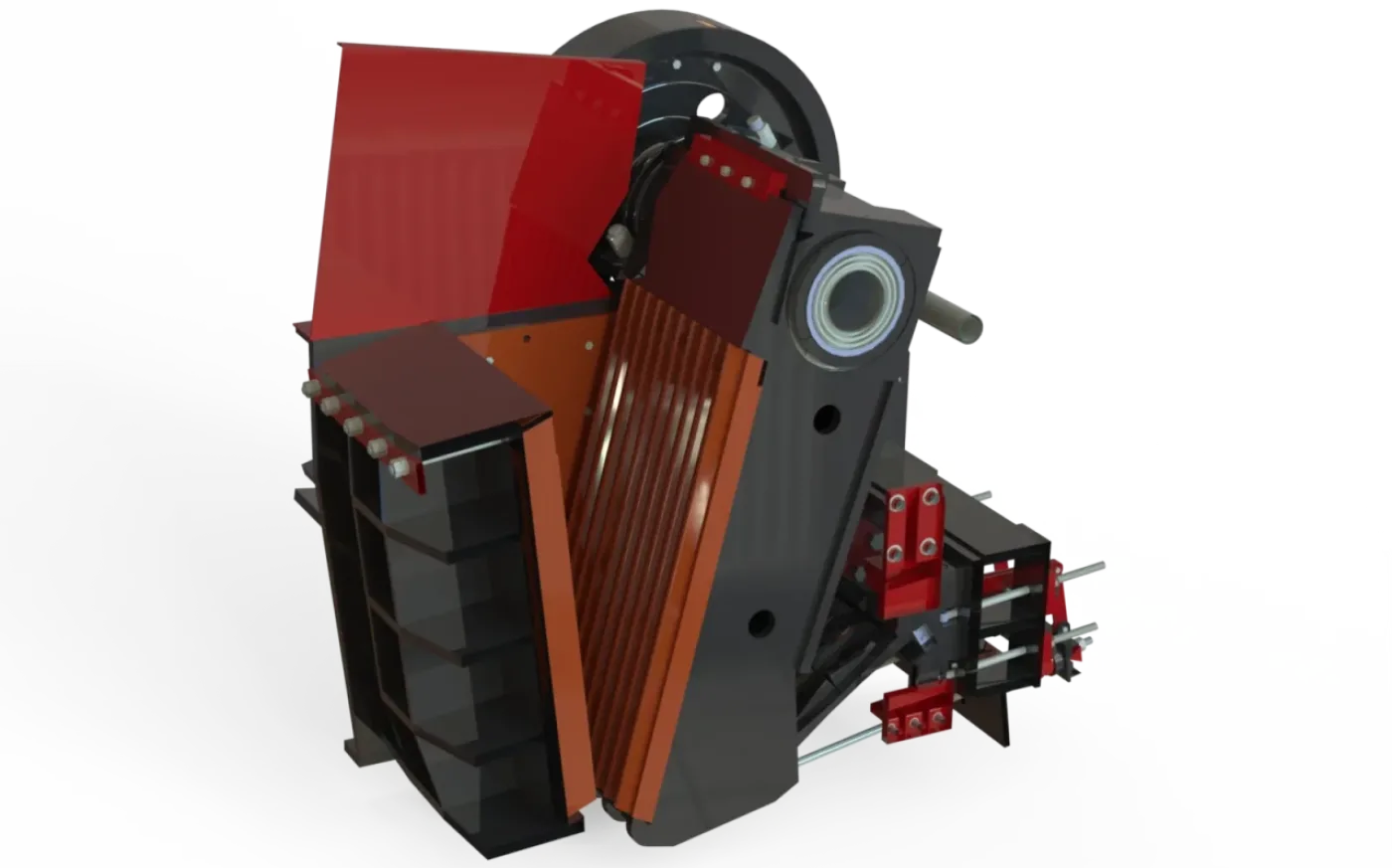
The GNRK series jaw crusher is a primary crusher that breaks rock by compression between a fixed jaw and an eccentric-driven swing jaw. It reduces coarse run-of-mine (ROM) feed to a manageable size in the first stage of the plant.
Technical data
Working principle
The cavity is wide at the top and narrows downward. The swing jaw oscillates on the eccentric shaft; material is progressively compressed and discharges by gravity through the CSS (closed-side setting). The stage is primary only; GNRK 900/1100 are narrow-opening secondary variants.
Material and application
Because it works by compression, the jaw crusher handles material above the abrasivity threshold (silica >10% or Bond Ai >0.15): granite, basalt, quartzite, river gravel and slag. Wet, sticky clay feed clogs the cavity and should be washed or scalped first.
Reduction and wear (TCO)
Typical reduction is 4:1–9:1 (up to ~8:1 in primary duty). Maximum feed is about 0.8–0.9 of the opening width. The main wear part is the jaw plates in austenitic manganese steel (Mn13/Mn18), which work-harden under impact; Mn18/Mn22 for high silica. Compression keeps metal wear and cost per tonne low.
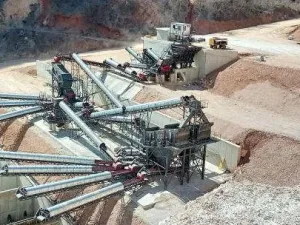
The jaw crusher is the entry machine of a complete plant covering crushing, screening, washing and concrete batching, which we can supply from a single source.
S: What is a jaw crusher used for?
C: Primary crushing of coarse run-of-mine rock; it is the first stage of the plant.
S: Which rock types is it suited to?
C: Hard, abrasive rock including granite, basalt, river stone and slag; compression protects the metal.
S: What is the reduction ratio?
C: Typically 4:1–9:1, up to ~8:1 in primary duty.
S: What is the maximum feed size?
C: About 0.8–0.9 of the opening width (roughly 1.1–1.25 m on the GNRK 140).
S: How can I get a quote?
C: Send us your capacity, material and model needs; we provide a project-specific quote and full-plant configuration.
Video
Sale Probability
57/100 · average
Technical Specifications
| GNRK 60 | 610×38040–13030/376,00020–80 |
|---|---|
| GNRK 90 | 900×65070–18075/9011,40060–225 |
| GNRK 110 | 1100×850150–225110/13233,000200–350 |
| GNRK 130 | 1300×1000125–25016042,500400–500 |
| GNRK 140 | 1400×1100135–30020047,000500–600 |
| GNRK 900 (sec.) | 900×20011–55305,96050–75 |
| GNRK 1100 (sec.) | 1100×35020–1107511,000100–150 |
QR code for this listing
Scan with your phone camera to open the listing.
Send this listing to a friend
Report this listing
Questions & Answers
No questions yet — be the first to ask.