Deutsch
 Français
 Türkçe
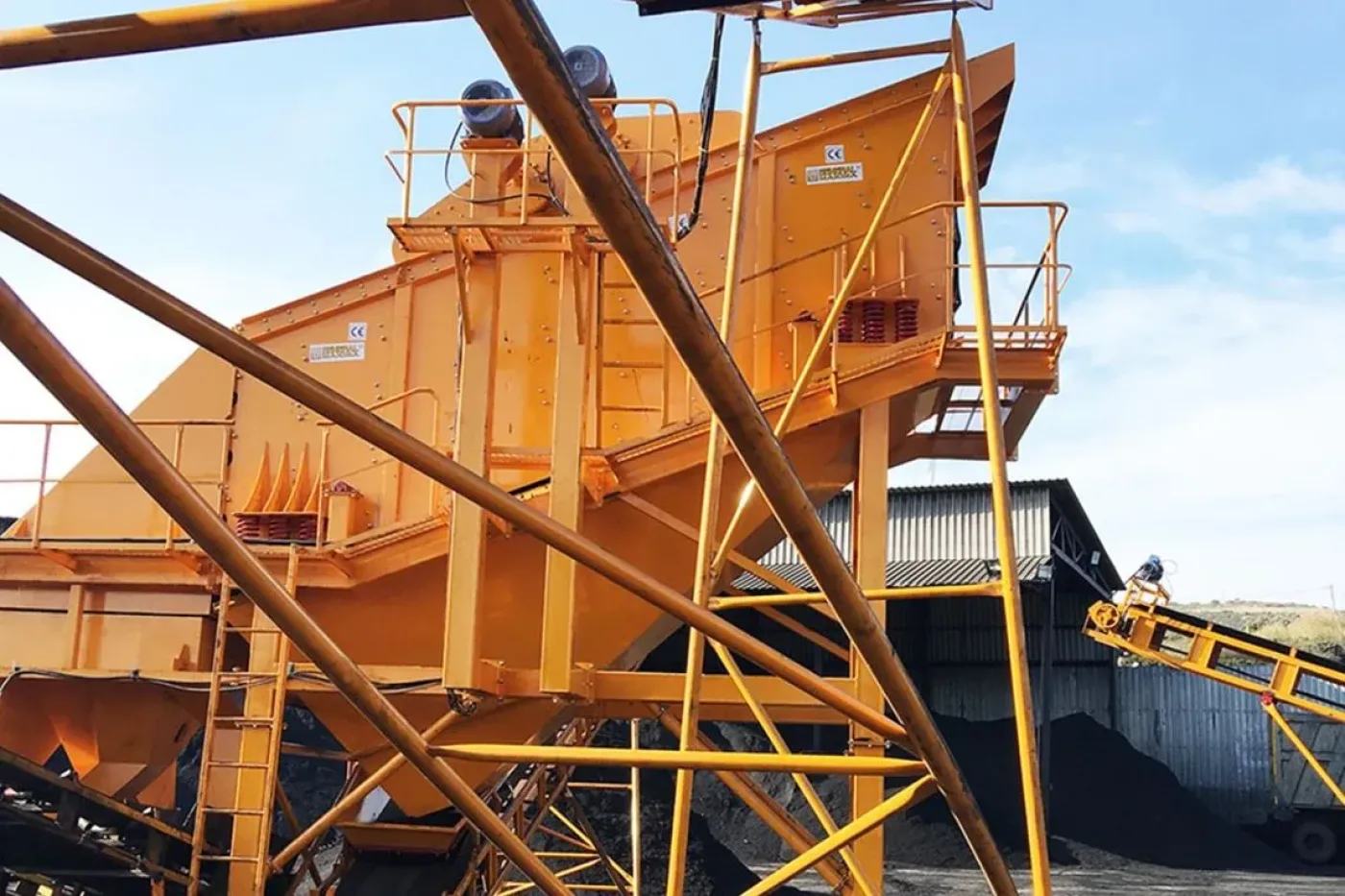
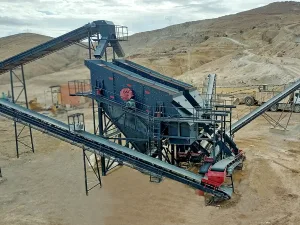
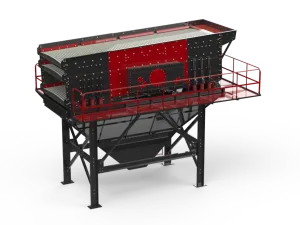
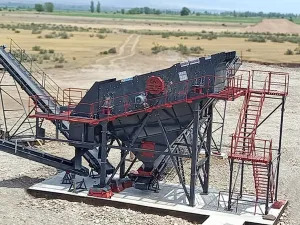
Top-Driven Multi-Slope Screen (Banana Screen)
Summary: The top-driven multi-slope screen (banana screen) has 3 different-slope stages that give +30% capacity over a flat screen of the same size; 100-400 tph, ELKK-2565 and ELKK-2580 models, 3 decks.…
The top-driven multi-slope screen (banana screen) has 3 different-slope stages that give +30% capacity over a flat screen of the same size; 100-400 tph, ELKK-2565 and ELKK-2580 models, 3 decks.
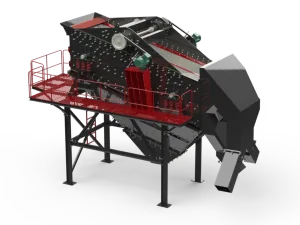
The top-driven multi-slope screen (banana screen) consists of 3 different-slope stages; thanks to the variable slope it gives 30% more capacity than a flat screen of the same size. Capacity is 100-400 tph and the models are ELKK-2565 and ELKK-2580. The whole body is weldless, bolt-assembled; screen media renew easily and the Stone-box front section delays wear.
The three-slope stage logic
Three stages run at different slopes; this three-slope logic is the banana-screen principle:
Thinning the bed quickly on the rear stage uses the screen surface more efficiently; this is the source of the +30% capacity.
Capacity and size
The screens are 3-stage/deck and offer a large surface area (about 16-20 m²). Achieved throughput shifts with the feed grading and moisture and with wet or dry operation; apertures are defined per order.
Typical applications
Large stationary plants requiring high capacity; applications where fines must be separated quickly at the start. Passing more product than a flat screen in the same footprint is an advantage in high-tonnage aggregate production.
Turnkey line
The banana screen usually sits at the heart of a large-scale investment; General Machinery takes on that investment as a turnkey project covering crushing, screening, washing and the batching plant. One contract, one responsible team and equipment matched end to end speed up commissioning.
S: What is a banana screen?
C: The banana screen (top-driven multi-slope screen) is a screen with 3 different-slope stages; the variable slope gives about 30% more capacity than a flat screen of the same size.
S: Why does it give more capacity than a flat screen?
C: The steep rear stage thins the material bed quickly at high flow speed; the screen surface is used more efficiently and total capacity rises by about 30%.
S: How many stages does it have?
C: 3 different-slope stages (steep rear, classic middle, low-slope front). The screen has 3 decks.
S: What is its capacity?
C: It ranges from 100-400 tph. Capacity varies with material gradation, moisture and whether screening is wet or dry.
S: Where is it used?
C: In large stationary plants requiring high tonnage and in applications where fines must be separated quickly at the start.
Video
Sale Probability
57/100 · average
Technical Specifications
| ELKK-2565 | 2500×65002×15330000 |
|---|---|
| ELKK-2580 | 2500×80002×22334000 |
QR code for this listing
Scan with your phone camera to open the listing.
Send this listing to a friend
Report this listing
Questions & Answers
No questions yet — be the first to ask.